Farmington – Farm game
- 4.8
- Rating
- 10.00M
- Installs
- Free
- Price

 Analysis by App-foxy
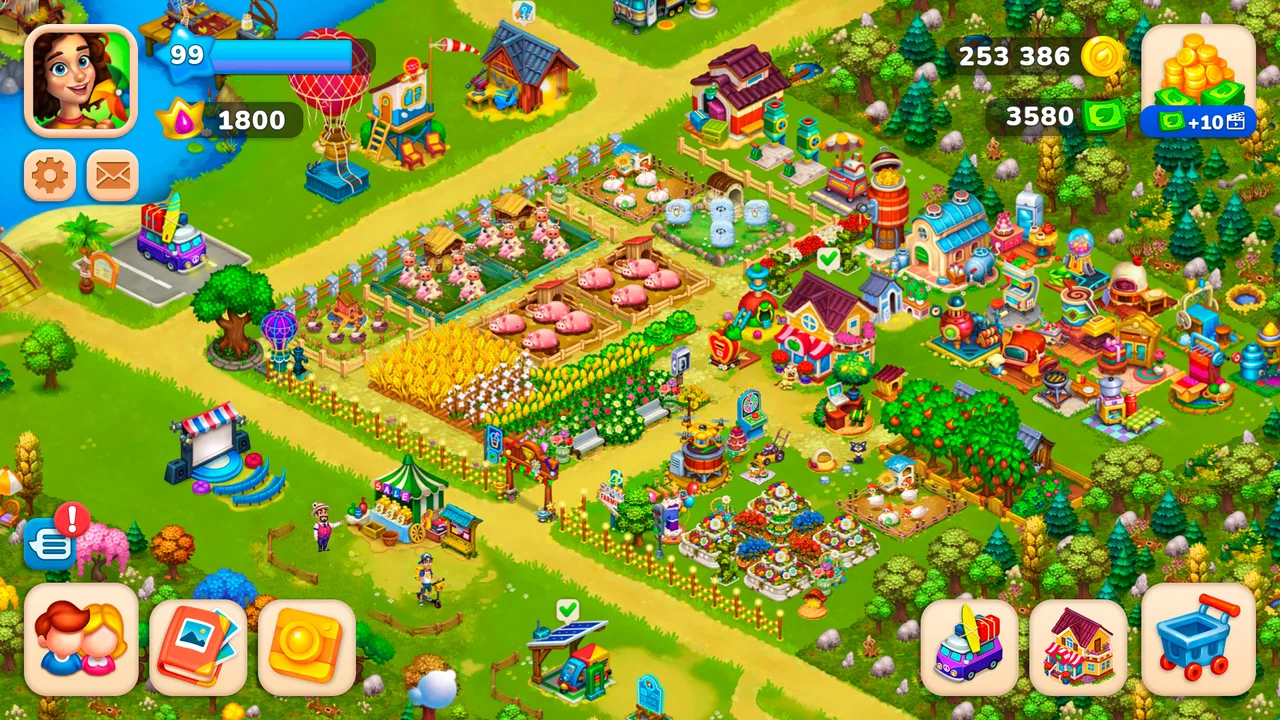
Farmington is the kind of farming adventure game that makes a strong first impression without asking me to understand everything at once. I begin with a small plot, start producing natural goods, and gradually turn a simple farm into something that feels more personal. The basic idea is familiar, but the appeal comes from the steady rhythm: check what is ready, decide what deserves my next bit of attention, then return later to see the results.
After spending time with it, I see why this free game from UGO Games has attracted such a large audience. It holds an average rating of 4.8 from around 296 thousand ratings, and it has passed 10 million installs. Those figures do not automatically make a game good, but here they match my experience of a polished, approachable adventure that is easy to start and pleasant to revisit.
Why the first week feels so inviting
The opening hours are built around small victories. I am not expected to create a perfect farm immediately. Instead, I learn by doing: produce something, collect the result, improve the property, and use the next opportunity to expand my routine. That gradual pace suits mobile play because I can make progress in short visits rather than needing a long uninterrupted session.
You May Also Like

 Pandora - Music & Podcasts
Pandora’s Music Is Easy to Start, but Harder to Recover
Pandora’s strength is its low-effort path from a seed to a station. Its weak spot is how much confidence it asks you to place in connection, setup, and quiet recovery.

 AccuWeather: Weather Radar
AccuWeather Review: A Quick, Clear Forecast for Everyday Decisions
For everyday plans, the best forecast is the one you can understand quickly. AccuWeather makes rain timing, radar, and local conditions easy to act on, with a few trade-offs.

 Hill Climb Racing
Why Hill Climb Racing Still Turns Crashes Into One More Run
A tiny car, a bumpy hill and one more upgrade: Hill Climb Racing keeps resurfacing because its simple chaos makes every near-miss feel personal.

 AliExpress - Shopping App
AliExpress Makes Global Shopping Feel Personal, but Shoppers Bear the Risk
AliExpress turns a global marketplace into a pocket-sized discovery engine. Its reach is useful, its shopping loop compelling, and its trade-offs easy to miss.

 Lords Mobile: Kingdom Wars
Lords Mobile Is a Kingdom-Building Routine, Not a Quick Match
A case-by-case verdict on the building, battles, device demands, and social commitments that make Lords Mobile rewarding for some players and exhausting for others.

 PDF Scanner app - TapScanner
TapScanner Makes Paperwork Easier to Capture, Check, and Share
TapScanner makes scanning with a phone feel less like a rescue operation and more like a dependable step in getting work done. Its capture tools are useful, though not flawless.
More From Our News Desk
View All News


What I particularly like is the way the farm gives each action a visible purpose. Planting or producing is not just a decorative activity; it feeds into the broader feeling that the settlement is becoming more capable. The adventure side also helps keep the experience from becoming a completely static management screen. When I want a change from arranging farm tasks, exploring the wider game world gives the session a different texture.
The first-week appeal is strongest for players who enjoy gentle progression. If you like watching a modest starting point become more organized, Farmington offers plenty of that satisfaction. It is less suitable if you want immediate action, complex combat, or a tightly scripted story. The game’s pleasure comes from accumulation and planning, not from dramatic moment-to-moment intensity.
I also found the free entry point useful. I can install the game and decide whether its pace fits me before spending anything. The content rating is Everyone, which makes it a comfortable choice for a broad audience, although younger players may still need guidance around optional purchases. The listed in-app purchase range runs from $0.49 to $119.99 per item, so I would treat spending controls as part of setting up the game responsibly.
A practical routine for new players
My best early habit was to avoid treating every available task as equally urgent. A farm game can quickly become a list of glowing prompts, but completing everything at once is not always the smartest use of a short session. I first looked at what would unlock or support the next meaningful improvement, then used leftover time for smaller jobs. That approach made the farm feel less demanding and helped me understand which activities actually mattered to my progress.
Another useful adjustment was to think ahead before closing the game. Rather than stopping immediately after collecting a finished product, I prepared the next cycle whenever possible. This turns a later visit into a productive return instead of a period spent remembering what I meant to do. It is a small workflow change, but it makes a noticeable difference in a game built around repeated visits.
That is one of Farmington’s less obvious strengths: it rewards a little preparation without requiring me to play like a spreadsheet manager. I can keep the routine casual, but a few seconds of planning make the whole farm feel smoother. Players who enjoy optimizing every minute will find room to do that, while relaxed players can simply follow the visible goals.
What remains enjoyable after the novelty fades
The more important question is whether the game still deserves space on my phone after the first week. In my experience, the answer depends on how much I enjoy maintenance-based progression. Farmington does not rely only on the excitement of discovering a new screen. Its recurring value comes from the loop of producing, improving, and returning to an increasingly developed farm.
That loop works well when I want a low-pressure activity between larger commitments. A realistic example is a lunch break: I can open the game, collect completed goods, start the next useful production step, and leave without feeling that I have abandoned a complicated mission. Later, I can check the farm again and continue from a prepared position. This makes it a better companion for fragmented free time than an adventure game that demands long sessions.
The adventure framing also gives the routine more variety than a pure crop timer. Farmington is not simply a digital garden where I repeat one action forever. The combination of farm development and exploration gives me reasons to change my focus. When the management side starts to feel repetitive, the adventure elements can refresh the session; when exploration feels like too much effort, the farm provides a calmer alternative.
Still, the long-term value is not unlimited for everyone. Once the pleasure of gradual improvement becomes familiar, players who need constant novelty may start to feel that they are repeating the same type of decision. The game is strongest as a dependable habit, not as an endlessly surprising experience. I would recommend it to someone who enjoys returning to a familiar project, while I would steer a novelty-seeking player toward a more story-heavy or action-focused adventure.
How to keep progress from becoming busywork
For month-to-month play, I found it helpful to give each visit a clear intention. One session might focus on keeping production moving, while another might be better spent exploring or improving the farm’s organization. Without that small distinction, every visit can blur into the same checklist. With it, the game feels more like a series of manageable projects.
I also recommend resisting the urge to measure success only by how quickly the farm grows. The game is more enjoyable when I treat improvement as a steady process rather than a race. Rushing can make the waiting and resource decisions feel like obstacles. A slower approach lets me notice the visual and practical changes around the farm, which is where much of the lasting satisfaction comes from.
This is also where optional purchases deserve careful thought. Because the game is free to start but includes purchases across a wide price range, I would not spend simply to remove every pause. The better question is whether a purchase improves a style of play I already enjoy. If I am still unsure about the basic loop, paying to accelerate it will not solve that uncertainty. For families, device-level purchase restrictions are sensible, especially because the highest listed item price is substantial.
Where the maintenance burden appears
Farmington is approachable, but it is still a game about upkeep. The farm works best when I return regularly enough to keep production and improvements moving. That can be relaxing, yet it can also turn into an obligation if I start feeling that I must check in rather than wanting to check in.
The maintenance burden is not just the number of tasks. It is the mental cost of remembering what I was preparing, what I wanted to improve next, and whether a short visit is worthwhile. Players who enjoy routines will see this as part of the charm. Players who prefer games that wait patiently without asking for attention may find the rhythm less comfortable.
My solution was to separate essential actions from optional tidying. I handled the tasks that supported the next stage of progress first and ignored minor distractions when I had limited time. This prevented the farm from turning every opening of the app into a full inspection. It also made the game more compatible with everyday use, because I could leave after a few useful actions instead of feeling forced to complete an invisible checklist.
Another trade-off is that a more developed farm can create more to manage. Expansion feels rewarding, but it may also increase the amount of planning required. That is a common tension in this type of game: growth is the reward, yet growth can make the routine heavier. Farmington handles that tension well enough for me, but it does not remove it.
What can cause fatigue over time
The main source of fatigue is repetition. Producing goods, collecting results, and preparing the next step are satisfying when they lead to visible change. They become less exciting when I feel that I am performing the same cycle mainly to unlock another delay. If I play too frequently or try to complete every available activity, the gentle rhythm can start to resemble chores.
There is also a temptation to compare the game with more specialized alternatives. A dedicated farming simulator may offer deeper control over crops, equipment, or schedules. A traditional adventure game may provide stronger narrative momentum and more immediate discoveries. A highly social farming title may make collaboration the central reason to return. Farmington sits between these approaches, combining a welcoming farm foundation with adventure-flavored progression. That broad mix is its advantage, but it also means it may not satisfy someone looking for maximum depth in just one area.
I would skip it if I dislike timers, gradual unlocks, or games that expect repeated check-ins. I would also skip it if I want a complete, self-contained adventure that I can finish over a weekend. Farmington is designed around continuation. Its best moments come from coming back to something I have been building, not from reaching a final dramatic conclusion.
On the other hand, I would recommend it to players who want a calm mobile game that can fill short gaps in the day. It is a particularly good fit for someone who likes decorating or developing a personal space, enjoys light resource decisions, and does not mind letting progress unfold. The Everyone rating broadens its audience, but the real deciding factor is patience with the game’s repeated rhythm.
Version, access, and everyday practicality
The current version is 1.80.1, and the game supports devices running Android 7.1 or later. That makes the compatibility requirement worth checking before installation, especially if I am using an older phone or tablet. Since the game is free, trying it is straightforward, but I would still make sure the device has enough comfortable screen space for managing a growing farm.
Farmington is best played with a stable personal routine rather than in one long burst. I like it on a phone because the farm is easy to revisit, but I would not choose it for a commute where I expect constant uninterrupted action. Its value comes from alternating attention: a few active decisions, a pause, then a later return when something has changed.
That pattern also explains why the game can feel more substantial than its short store summary suggests. The appeal is not one spectacular feature; it is the way small systems support a repeatable habit. The farm gives me a home base, production gives me a reason to plan, and adventure activities prevent the experience from feeling completely stationary.
My long-term verdict on Farmington
After the initial excitement settles, I think Farmington earns lasting space for the right kind of player. It is a friendly adventure game with a farming core, a free starting point, and enough ongoing structure to support regular short sessions. UGO Games has made the basic loop easy to understand, while still leaving room for players who enjoy planning their next improvement.
Its limitations are equally clear. The game can become routine-heavy, its gradual pace will not suit everyone, and optional purchases mean I would approach acceleration carefully. It is not the best alternative to a deep simulation, a story-led adventure, or a purely competitive game. Those choices are better when a specific type of depth matters more than a comfortable blend.
For me, the deciding test is simple: after opening it several times, do I still feel that I am visiting my farm, or am I merely clearing tasks? When I use it at a relaxed pace and choose a purpose for each visit, it remains enjoyable. When I try to optimize every minute, the charm fades faster. The lasting value comes from treating Farmington as a gentle habit, not a daily obligation.
I would recommend downloading it to anyone who wants an approachable farm-building adventure for spare moments and likes watching progress accumulate over time. I would warn impatient players, completionists, and people who dislike recurring maintenance that the same qualities may work against them. For my own phone, it succeeds because it gives me something pleasant to return to without demanding that every session become a major event.
FAQs for Farmington – Farm game
01What is Farmington – Farm Game all about?
Farmington – Farm Game is a captivating simulation game that allows players to build and manage their own farm. You can plant crops, raise animals, and expand your farm with various buildings and decorations. The game combines strategy and creativity, making it engaging for players of all ages.
02Is Farmington – Farm Game free to play?
Yes, Farmington – Farm Game is free to download and play on both Android and iOS devices. However, it offers in-app purchases for players who wish to enhance their gaming experience with additional features, resources, or faster progress. These purchases are optional and not necessary for enjoying the game.
03What are the device requirements for Farmington – Farm Game?
Farmington – Farm Game requires an Android device with version 5.0 or higher, or an iOS device with iOS 10.0 or later. The game is optimized for smartphones and tablets, ensuring smooth gameplay across devices. Ensure your device has sufficient storage space and a stable internet connection for the best experience.
04Can I play Farmington – Farm Game offline?
Farmington – Farm Game requires an internet connection to access all features and updates. While some basic gameplay elements might be available offline, to fully enjoy the community features, events, and to sync your progress, an internet connection is necessary. This ensures you have access to the latest content and improvements.
05How does Farmington – Farm Game handle user privacy and data?
Farmington – Farm Game is committed to protecting user privacy. The app collects only essential data necessary for gameplay, and complies with data protection regulations. Users can review the privacy policy within the app or on the developer's website to understand what data is collected and how it is used. Adjust your settings if needed to maintain your privacy preferences.
Pros
- Engaging gameplay with diverse farming tasks.
- Vibrant graphics enhance user experience.
- Social features to connect with friends.
- Frequent updates with new content.
- Offline mode available for on-the-go play.
Cons
- In-app purchases can be expensive.
- Requires a stable internet connection.
- Limited customization options for farms.
- Ads can be intrusive at times.
- Some tasks can feel repetitive.

Farmington – Farm game
Gallery